
Childhood
Packaging Knowledge
Educational Content Creators, Sesame Street, and the Currency of Attention
Educational media only takes root when it reflects the dominant communication habits of its culture.
The Blueprint (1969)
Selling the alphabet.
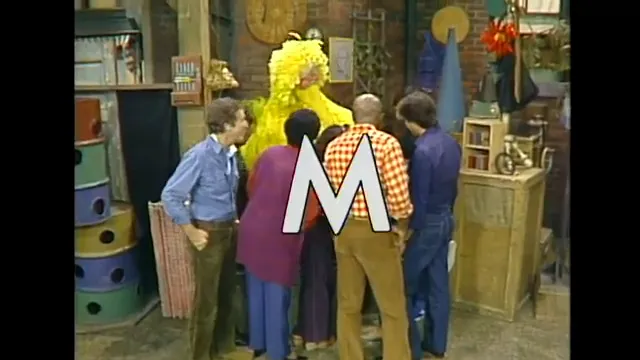
When Joan Ganz Cooney and the Children’s Television Workshop launched Sesame Street in 1969, they recognized that young children would never sit through static classroom lectures broadcast across a living room screen (Kearney & Levine, 2019; Krieger, 2026).

Television was already established as an entertainment machine funded by commercial sponsors.
To keep young viewers from turning the channel dial, the workshop deliberately borrowed the animated visual gags perfected by commercial advertisers (Holiday, 2023; Krieger, 2026).
Backed by foundational grants and federal funding through public broadcasting, the show used an entertainment tool families already owned to deliver cognitive growth and school readiness directly into low-income households for pennies on the dollar (Kearney & Levine, 2019; Krieger, 2026).
The breakthrough was not that television changed the fundamentals of human learning.
Instead, Sesame Street proved that mass educational media could succeed only by packaging intellectual instruction inside the commercial format that American culture already consumed.
- Made by the Children’s Television Workshop (Joan Ganz Cooney and Lloyd Morrisett). First aired November 1969.Krieger, 2026
- Funded by the Carnegie and Ford foundations, the Corporation for Public Broadcasting and the federal government.Krieger, 2026, Week 4 Lecture 4
- About $5 per child per year (in today’s dollars).Kearney & Levine, 2019
- Gains “particularly pronounced for boys and black, non-Hispanic children, along with those children who grew up in counties characterized by greater economic disadvantage.”Kearney & Levine, 2019

Teen years
The screen shrinks
Just as Sesame Street revolutionized early childhood education in 1969 by appropriating the fast-paced techniques of television commercials, modern educational creators use digital video to turn presentation into the currency that buys viewer attention.
“In essence, Sesame Street was the first MOOC.”Kearney & Levine, NBER Working Paper 21229 (2015), p. 2
My foundational philosophy is that technology does not reshape society, it reveals society.

Today
Attention capital
Modern educational content creators on YouTube, TikTok, and Instagram apply this exact commercial playbook to adult learning and professional skill-building.
Modern platforms reveal an audience that demands visual speed, intentional visual short form video design, and friction-free delivery over traditional text-based study.
In digital environments, presentation is the currency that buys attention, and investments are made where attention is paid.
Because digital platforms offer scalable opportunities to monetize domain expertise, creators package complex subjects like computer programming, real estate finance, and corporate strategy into concise video breakdowns.
They rely heavily on visual motion graphics and cognitive signalling cues to highlight critical points and maintain viewer focus (Alpizar et al., 2020, as cited in Forsström et al., 2025).
- d = 0.38Signalling cues raise learning moderately
- d = 0.47More for beginners
- d = 0.50Moving cues beat still ones
Alpizar et al., 2020, via Forsström et al., 2025, p. 33
Each d is an effect size: how much the cues raised learning scores, where 0.2 counts as small, 0.5 as medium and 0.8 as large.
In my own real estate business, I experienced this firsthand when I dove deep into watching YouTube videos about real estate investing, wholesaling, and negotiating real estate deals.
That form of education paid dividends as I was able to close on my first off market real estate transaction and make a profit without a formal education.
For the creators that do create content that make a tangible impact for their viewers, social media allows them to build independent businesses funded by advertising revenue, brand sponsorships, and private memberships.
By building independent media channels, creators bypass the institutional gatekeeping of universities and academic publishers, bringing executive-level knowledge directly to everyday learners.
The trade-off
The democratization of bite-sized knowledge carries an unintended cultural consequence for intellectual depth.
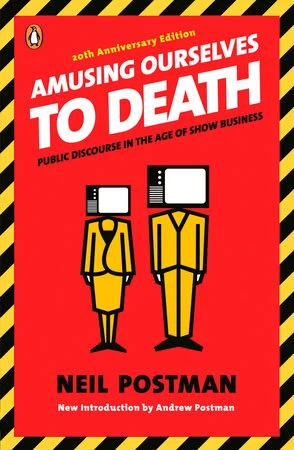
Every technological gain produces a corresponding trade-off, echoing Neil Postman’s critique that recasting education into visual show business risks eroding the discipline required for analytical thought (Yardley, 1985).
Neil Postman’s three rules for teaching on television
- No prerequisites.
- No perplexity.
- No exposition.
Postman, via Yardley, 1985
Modern society increasingly bypasses traditional academic institutions to seek professional education from individual creators, evaluating the authority of information by subscriber counts and video likes rather than academic credentials.
While digital video offers immediate access, educational research shows that habitual screen-based micro-learning often encourages shallow skimming and undermines the cognitive endurance required for deep reading and sustained problem-solving (Hakemulder & Mangen, 2024, as cited in Forsström et al., 2025).
The challenge this presents is that viewers gain an immediate illusion of mastery from watching an entertaining ten-minute explainer, confusing the passive consumption of polished content with the hard work of practical execution.
This dynamic democratizes public access to specialized domain expertise across platforms, while catering to a culture that increasingly prefers effortless digital convenience over rigorous intellectual friction.

Next morning
Doorway or substitute
The historical evolution from Sesame Street to algorithmic social video demonstrates that educational media always mirrors society’s appetite for convenience.
However, accessible presentation cannot replace the personal effort required to build genuine intellectual competence.
The true test of digital learning is whether audiences use bite-sized video as an initial doorway into deeper study, or treat entertaining summaries as a permanent substitute for authentic, disciplined mastery.